




Tracing the Path of the Yali: The Birth and Manifestation of a Mythical Guardian in Culture and Textiles
In the vast and layered universe of Indian mythology, certain figures transcend storytelling to become symbols—etched into stone, woven into cloth, and carried forward through generations. One such figure is the Yali (also known as Vyala), a mythical creature that occupies a powerful space between imagination and belief. Fierce yet benevolent, the Yali’s journey from temple walls to handwoven textiles is a testament to how myth, art, and craft intertwine in Indian culture.
The Origins of the Yali
The Yali emerges from South Indian temple mythology, particularly in Tamil and Deccan traditions. Described as a composite creature—often part lion, part elephant, and sometimes infused with horse or dragon-like features—the Yali was conceived as a guardian. More powerful than the lion and more imposing than any single animal, it symbolised strength amplified by wisdom.
Temple architecture from the Chola, Vijayanagara, and Nayaka periods frequently features Yalis carved along pillars, staircases, and entrances. Positioned deliberately at thresholds, they were believed to ward off negative forces, protect sacred spaces, and serve as silent sentinels of divine energy. Their wide eyes, flared nostrils, and poised stance reflect both alertness and authority—qualities deeply revered in a society where symbolism guided spiritual life.

From Stone to Symbol
Over time, the Yali moved beyond its architectural role to become a visual language. In sculptures, its form evolved—sometimes more lion-like, at other times emphasising the trunk of an elephant or the coiled energy of a mythical beast. Despite these variations, its essence remained unchanged: the Yali represented protection, courage, and the balance between ferocity and restraint.
This adaptability allowed the motif to travel—from temples into manuscripts, murals, and eventually, textiles. As royal courts and temple towns flourished, artisans began translating architectural symbols into wearable art. What was once carved in granite found new life in silk and zari.
The Yali in Indian Textiles
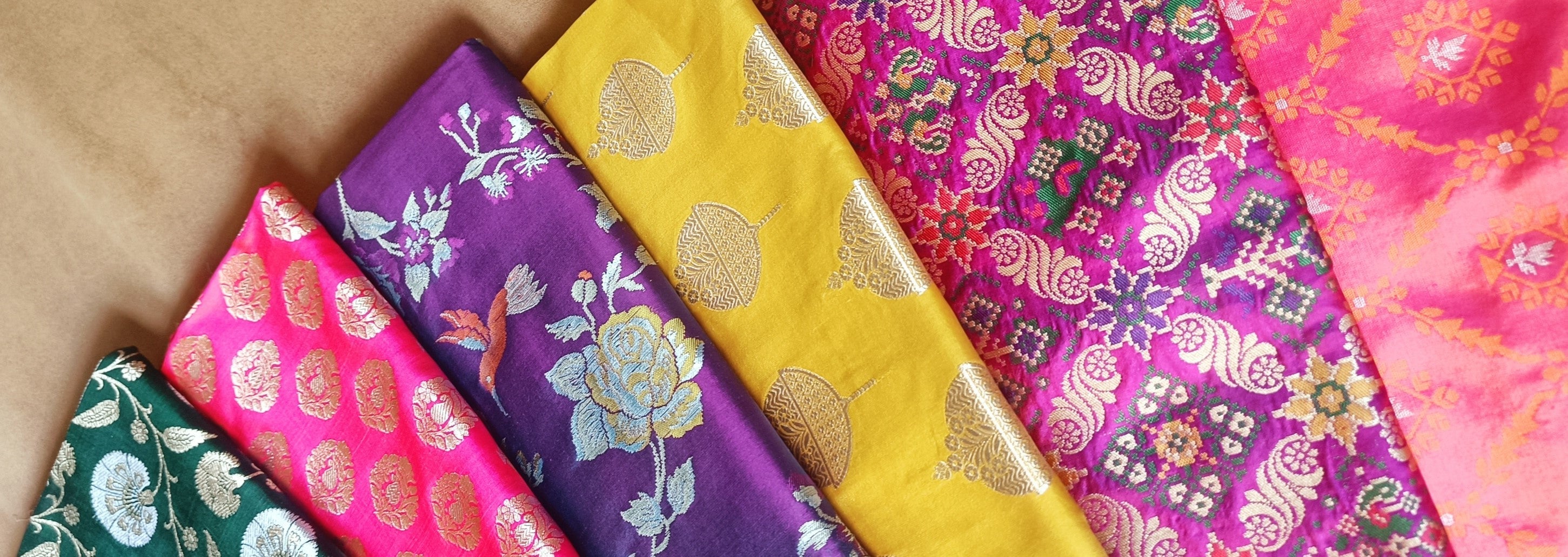
The most iconic manifestation of the Yali in textiles appears in South Indian handloom traditions, particularly Kanjivaram silk sarees. Woven along borders and pallus, the Yali motif is often rendered in gold zari, standing proud amidst florals, creepers, and geometric patterns. Its presence is not merely decorative—it carries the same protective symbolism it held in temples.
In bridal Kanjivarams, the Yali is especially significant. A bride draped in a saree adorned with this mythical guardian symbolically steps into marriage protected by tradition, strength, and ancestral blessings. The motif becomes both armour and adornment—an unspoken invocation of resilience and grace.
Beyond Kanjivarams, Yalis also appear in Gadwal weaves and temple-border designs, sometimes stylised to suit regional aesthetics. Whether bold and prominent or subtly woven, the motif remains instantly recognisable to the trained eye.

Craftsmanship and Meaning
Weaving a Yali is no small feat. The complexity of its form requires skilled craftsmanship and precision. Every curve of the trunk, every flare of the mane, must be carefully plotted on the loom. In traditional weaving communities, these motifs were passed down through memory and practice, not written patterns—making each interpretation a continuation of lived knowledge.
This is where the beauty of Indian textiles truly lies: motifs are not chosen at random. They are selected with intention, meaning, and cultural memory. The Yali is woven not just to be seen, but to be felt—its symbolism quietly accompanying the wearer through moments of celebration and significance.
A Living Motif
Today, the Yali continues to evolve. Contemporary designers and handloom houses reinterpret the motif—playing with scale, abstraction, and placement—while preserving its essence. In a time when fashion often looks outward for inspiration, the Yali reminds us of the depth already embedded within our own cultural vocabulary.
Tracing the path of the Yali is, in many ways, tracing the path of Indian craftsmanship itself—rooted in mythology, shaped by devotion, and sustained through skilled hands. From temple corridors to wedding aisles, from stone to silk, the Yali endures as a symbol of protection, power, and timeless beauty.
In every thread that carries its form, the past speaks gently to the present—reminding us that some stories are not just told, but woven.